iOS 18 Battery Drain Fix: 3 Hidden Settings You Need to Disable Right Now
Introduction to iOS 18 Battery Drain Issues
The release of iOS 18 has brought with it a host of new features designed to enhance user experience and functionality. However, many users have reported encountering significant battery drain problems after upgrading to this latest version. This has raised concerns regarding the efficient use of battery resources, particularly among those who rely heavily on their devices throughout the day. The transition to iOS 18 can sometimes lead to unexpected challenges, especially in terms of power management.
Several features introduced in iOS 18, such as enhanced location services, richer visual elements, and background activity for apps, may contribute to increased battery consumption. While these functionalities aim to enrich the user experience, they can inadvertently lead to faster depletion of battery life. It is crucial for users to be aware of which settings may cause excessive battery usage in order to effectively mitigate these issues.
Additionally, some users may not immediately recognize the impact of updated configurations that come along with the iOS 18 upgrade. Although improvements are typically welcomed, the lack of optimization in certain areas can negatively affect battery longevity. Thus, it becomes imperative for users to familiarize themselves with the intricacies of these new settings. Identifying the elements responsible for battery drain is vital, not only to maintain optimal device performance but also to extend usability throughout each day.
In the upcoming sections, we will delve deeper into specific settings that can be disabled to help alleviate this battery drain problem. By raising awareness of these common issues within iOS 18, we aim to equip users with the tools necessary to optimize their device’s battery life effectively.
Settings That Contribute to Battery Drain
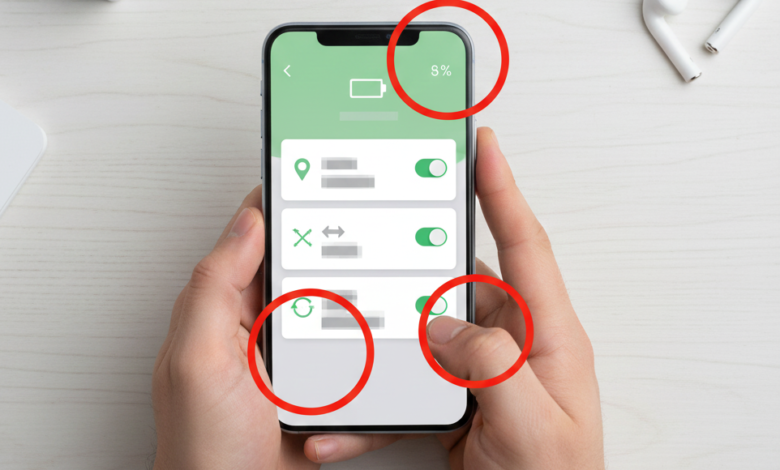
In iOS 18, several hidden settings can significantly contribute to battery drain, affecting overall device performance and longevity. Users may not be fully aware of their impact, making it crucial to identify and disable them to enhance battery life.
Firstly, the background app refresh feature is often overlooked. This setting allows applications to update their content in the background while you are performing other tasks. While it can provide a convenient way to keep apps up to date, it also consumes a substantial amount of battery power, especially if multiple apps are refreshing simultaneously. Disabling background app refresh can lead to considerable improvements in battery efficiency, as the device can conserve power by limiting unnecessary background activity.


Secondly, location services are another significant drain on battery life. Many apps use GPS to provide accurate location data, but frequent use can quickly deplete the battery. While some users may require apps to access location services continuously, others may only need this functionality periodically. Adjusting location settings to “While Using the App” or turning off location services for non-essential applications can help in reducing battery consumption considerably.
Lastly, the automatic downloads feature, which allows apps and updates to be downloaded automatically over Wi-Fi or cellular data, can also impact battery life. Though convenient, this setting runs in the background and can result in unexpected battery drain. By disabling automatic downloads, users gain more control over when and how much battery power is utilized, ensuring that their device remains charged longer during daily use.
By recognizing and adjusting these hidden settings, iOS users can work toward mitigating the battery drain issues commonly experienced with iOS 18.
Step-by-Step Guide to Disabling These Settings
To enhance your iOS 18 device’s battery performance, it is crucial to disable certain settings that may contribute to battery drain. The following guide walks you through the straightforward process of locating and disabling these options.
Begin by opening your device and navigating to the Settings app. This app can often be found on your home screen, represented by a gear icon. Once inside, scroll down and tap on Privacy & Security. This section houses many settings that control app permissions and privacy features, some of which may be affecting your battery life.
Next, focus on the Location Services option. Tap on it to view a list of apps that use location data. Here, you can disable location services entirely or adjust the settings for individual apps. Ideally, set non-essential apps to While Using the App instead of Always. This simple adjustment can significantly conserve battery.
Afterward, return to the main Settings menu and tap on Battery. In this section, you will find an option labeled Background App Refresh. This feature allows apps to refresh their content in the background, often leading to increased battery consumption. To limit its impact, tap on Background App Refresh and select Off or Wi-Fi Only.
Finally, consider revisiting the Notifications setting within the Settings app. Disabling or limiting notifications can help reduce power consumption. Specifically, navigate to each app under the Notifications tab and toggle off Allow Notifications where necessary.
By following these steps, you will effectively disable settings that may be draining your battery, allowing your device to operate more efficiently and prolong its battery life.
Additional Tips for Extending Battery Life on iOS 18
When it comes to maximizing the battery life of your iOS 18 device, there are several strategies that can complement the disabling of hidden settings. Managing app usage is crucial; start by regularly reviewing the apps that consume significant battery power. Navigate to Settings > Battery to identify applications that might be running in the background and using excess energy. Consider limiting the background activity of these apps, or deleting those that are unnecessary.
Another important aspect is your device’s screen brightness. High screen brightness not only drains the battery more quickly but can also cause eye strain. It is advisable to manually adjust the brightness settings or enable Auto-Brightness under Settings > Accessibility > Display & Text Size. Lowering screen brightness or enabling Night Shift to reduce blue light can have a significant impact on battery longevity.
Connectivity features such as Bluetooth, Wi-Fi, and Location Services can also play a vital role in battery consumption. It is recommended to disable Bluetooth when not in use, as this feature can drain battery power even when the device is idle. Similarly, turn off Wi-Fi if a reliable connection is not available. Additionally, consider managing Location Services by setting specific apps to While Using instead of Always to minimize unnecessary GPS usage.
Lastly, being aware of your usage habits can also greatly influence battery health. Encouraging practices such as charging your device before it hits extremely low battery levels can help maintain a healthier battery. Regularly updating your iOS to incorporate the latest optimizations and fixes is also beneficial. By practicing these habits, users can achieve better battery performance and extend the lifespan of their iOS 18 devices.